
Corey Shipley on TN’s 2026 Constitutional Amendments
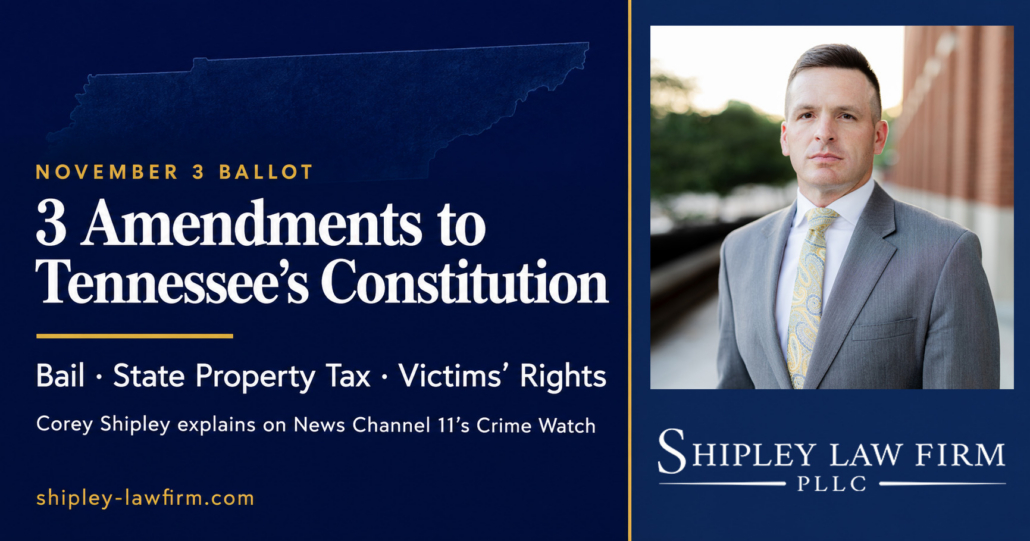
Tennessee voters will decide on three proposed amendments to the state constitution on November 3. Defense attorney Corey B. Shipley joined News Channel 11’s Crime Watch to explain what each one means and what would change if it passes.
The Three Amendments at a Glance
Amendment 1: Bail
Changes Article I, Section 15. Today, only capital offenses can be denied bail. The amendment would let a judge or magistrate deny bail before trial, when the proof is evident or the presumption great, for these additional charges:
- Acts of terrorism
- Second-degree murder
- Aggravated rape and aggravated rape of a child
- Grave torture
- Any offense that requires serving at least 85% of the sentence
The judge would have to state the reasons on the record.
Amendment 2: State Property Tax Ban
Changes Article II, Section 28 to prohibit the state from taxing real, personal, or mixed property. Tennessee has not had a state property tax in more than 75 years. Local property taxes set by cities and counties would not be affected.
Amendment 3: Crime Victims’ Rights
Replaces Article I, Section 35, the victims’ rights section voters added in 1998. New rights would include:
- Fair treatment
- Taking part in the parole process
- Protection from harassment, intimidation, and abuse
- Being told the minimum sentence and the scheduled release date
- Having the safety of the victim, their family, and the public considered before a release
It also restates existing rights, such as notice of court proceedings and of any release or escape, conferring with prosecutors, and restitution. The amendment states that it does not create grounds to overturn a conviction or a new right to sue for damages, except as its text provides.
What It Takes to Pass
Each amendment needs more yes votes than no votes, and the yes votes must also be more than half of all votes cast in the governor’s race. The amendments appear on the ballot right after the governor’s race.
Sources: Tennessee Secretary of State; reporting by WSMV and the Tennessee Lookout. This article is general information, not legal advice.
