
Car Accident Lawyers Serving Northeast Tennessee
Johnson City Car Accident Lawyer
A car wreck can leave you with injuries, medical bills, and time away from work, while the other driver’s insurance company starts working on its side of the story. You can have a team working on yours. Tell us what happened, and we will review your case for free.
- Former Federal Prosecutor
- Former Assistant U.S. Attorney
- Former DEA Special Agent
- No Fee Unless You Win

Three Things to Know After a Car Wreck
The other driver’s insurer opens a file on your crash early. These three things can shape what happens next.
You may be asked for one early
An adjuster for the other driver may call and ask to record your account of the crash. Before you give one, you can talk to a lawyer about your rights.
Fault can be divided
Tennessee follows a 50 percent rule. You can recover only if your share of fault is less than 50 percent, and your recovery is reduced by that share.
The clock starts at the crash
Tennessee generally allows one year to file an injury lawsuit. A related criminal prosecution can extend that to two years in some cases, but only when strict conditions are met. Talking with an insurance company does not pause the clock.
Check Your Timeline
Tennessee gives most injury cases one year to file. Enter the date to see how much of that time has passed.
Nothing you enter here is saved or sent anywhere.
Your timeline will appear here.
- Cases against a city or county generally must be filed within 12 months.
- A related criminal prosecution can make the period two years in limited cases.
- Some facts can change when the period starts.
This shows the general rule only. It is not legal advice, and your actual deadline depends on your facts.
Car Wrecks in Northeast Tennessee
Drivers here share the road with interstate traffic on I-26 and I-81, commercial corridors such as State of Franklin Road and US-11E, and two-lane roads through the surrounding counties.
Public studies add some local detail. A February 2026 Johnson City MTPO study of SR 75 (Suncrest Drive) counted 187 crashes, including one fatal crash, between the I-26 westbound ramps and Hugh Cox Road from 2020 through 2024. A 2022 Washington County road safety study reviewed selected segments of Gray Station Road, Old Gray Station Road, and Greenwood Drive.
Johnson City Medical Center is the region’s Level I trauma center. Holston Valley Medical Center in Kingsport and Bristol Regional Medical Center are Level III. Wherever you were treated, your records are part of your case, and we can help you request them.
Injury lawsuits that go to court are generally filed in circuit court. Washington County Circuit Court sits in Jonesborough, Sullivan County Circuit Court sits in Blountville, Bristol, and Kingsport, Carter County’s is in Elizabethton, and Greene County’s is in Greeneville. The right court depends on the parties and the facts of the case.
What We Do on a Car Accident Case
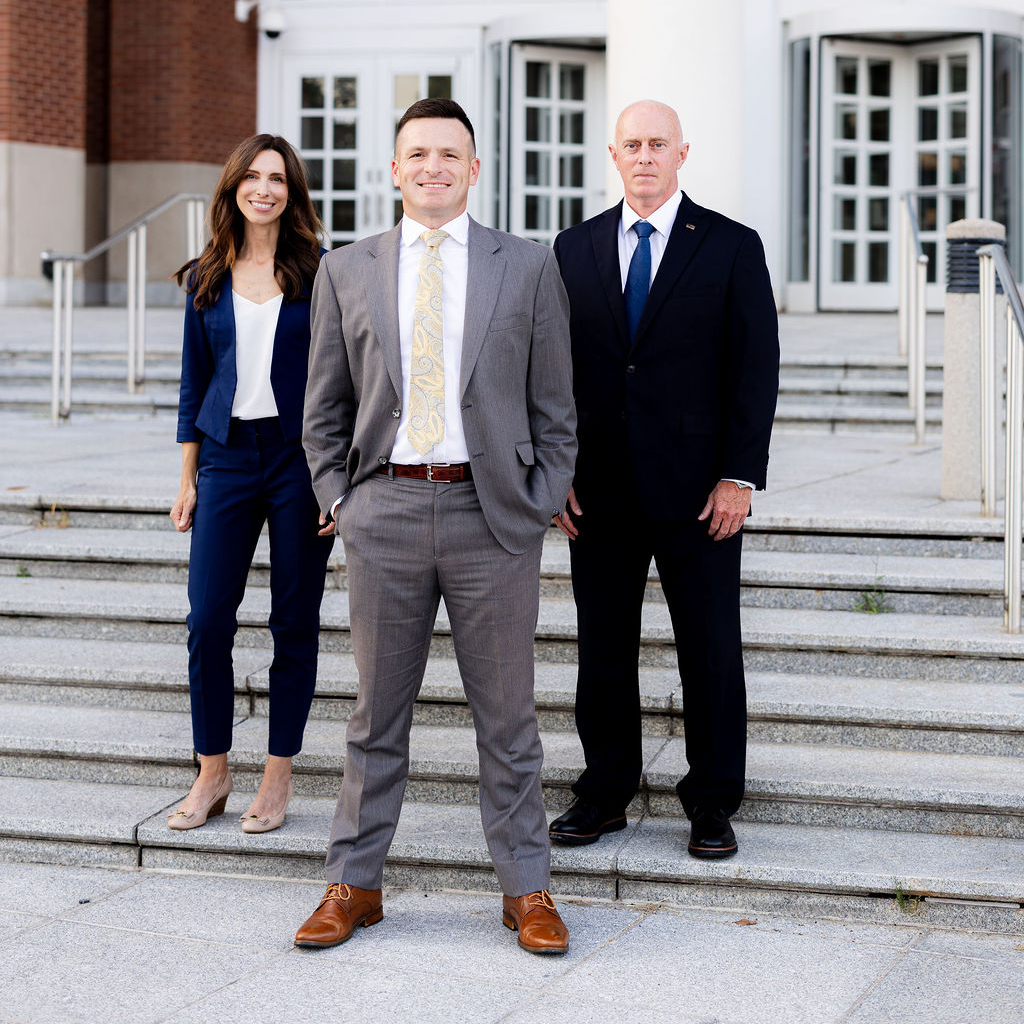
Our attorneys are former federal prosecutors. They spent years evaluating evidence and deciding what holds up, and they bring that same discipline to your case.
- Gather the crash report, photos, and witness information
- Request that video and vehicle data be preserved where it exists
- Collect your medical records and bills
- Document lost wages and how the injury affects your daily life
- Review every available policy, including your own uninsured motorist coverage
- Handle communication with the insurance companies
- Explain your options in plain terms so you can decide what to do
How It Works
- 1Tell us what happened
- 2We review your case, free
- 3You decide how to proceed
Get Your Free Car Accident Case Review
Former federal prosecutors. A retired DEA Special Agent on the team.
Takes about a minute. Only your name and phone number are required.
No fee unless you win. We respond within one business day.
Your information stays with our firm. See our Privacy Policy.
Prefer to Call?
Talk with our team about your car accident.
(423) 777-7447 Shipley Law Firm, PLLC2903 E Oakland Avenue
Johnson City, Tennessee 37601
What to do after a car accident in Northeast Tennessee
If you can, take these steps in the hours and days after a crash.
- Get medical care, and tell your doctor about every symptom.
- Call the police so a crash report is made.
- Photograph the vehicles, the scene, and your injuries.
- Get names and phone numbers from witnesses.
- Keep every medical record, bill, and receipt.
- Talk with a lawyer before you sign anything or give a recorded statement.
Proving fault and documenting your injuries
A car accident case asks two separate questions. The first is who caused the crash. The second is whether the crash caused the injuries you are claiming. Crash reports, photos, video, vehicle damage, and witness accounts speak to the first. Medical records, treatment history, and your doctors speak to the second. A gap in treatment can be used to question an injury, so following your care plan matters.
Tennessee’s filing deadline and the criminal-charge exception
Tennessee generally requires an injury lawsuit to be filed within one year (Tenn. Code Ann. § 28-3-104(a)(1)). The period can be two years in total when criminal charges are brought against the person who caused the crash, the prosecution begins within the first year, and you sue the person who was prosecuted (§ 28-3-104(a)(2)). Courts read that exception strictly. A traffic citation charged as a state criminal offense can qualify, while a violation of a city ordinance does not. The two years run from the crash, not from the charge.
Insurance negotiations do not pause the deadline. Deadlines depend on the facts, so talk with a Tennessee attorney promptly.
How partial fault affects your recovery
Tennessee uses modified comparative fault. If your share of fault is less than 50 percent, you can recover, and your damages are reduced by your percentage. At 50 percent or more, recovery is barred. When more than one driver or company shares responsibility, fault is divided among everyone involved. A traffic ticket does not decide civil fault by itself.
Insurance, uninsured drivers, and underinsured drivers
Several kinds of coverage can be involved after a wreck. The at-fault driver’s liability policy covers injuries that driver caused, up to its limits. Your own uninsured motorist coverage may apply when that driver has no insurance or not enough. In Tennessee, uninsured motorist limits generally match your liability limits unless a named insured rejected the coverage or chose lower limits in writing (Tenn. Code Ann. § 56-7-1201). A driver whose limits are lower than your uninsured motorist limits can be treated as uninsured (§ 56-7-1202). Policy priority, credits, notice rules, and policy terms affect what is available, and coverage for damage to your vehicle is a separate question.
If a commercial truck was involved, see our truck accident page. Riders can find motorcycle-specific information on our motorcycle accident page.
Crashes involving a city or county vehicle
Claims against a Tennessee city or county fall under the Governmental Tort Liability Act. Suit generally must be filed within 12 months (Tenn. Code Ann. § 29-20-305(b)), the case is heard in circuit court, and damages are generally limited to $300,000 per person and $700,000 per occurrence (§ 29-20-403). Claims involving a state vehicle follow a separate process through the Tennessee Claims Commission.
Recoverable damages and Tennessee’s limits
Depending on the evidence, damages can include medical expenses, lost income, reduced earning capacity, property loss, and pain and suffering. Economic losses such as medical bills and lost wages are not limited by Tennessee’s general damages cap. Noneconomic damages are generally capped at $750,000, or $1,000,000 for a short list of catastrophic injuries defined in the statute (Tenn. Code Ann. § 29-39-102). The statute also lists exceptions, including certain cases where impairment caused the injury. These are legal limits, not a measure of what any case is worth.
If a crash took a family member’s life, our wrongful death page explains how those claims work.
Questions about your situation? Request a free case review.
Car Accident Questions
How long do I have to file a car accident lawsuit in Tennessee?
Generally one year from the crash. The period can be two years in total if criminal charges are brought against the at-fault driver and the other conditions in the statute are met. Claims against a city or county generally must be filed within 12 months. Because these rules are strict, talk with a lawyer early.
Can I recover if I was partly at fault?
Possibly. You can recover if your share of fault is less than 50 percent, and your damages are reduced by your percentage. At 50 percent or more, recovery is barred.
Should I give the other driver’s insurance company a recorded statement?
You may get a call from an adjuster asking for a recorded statement. Before you give one, you can talk to a lawyer about your rights and how the statement may be used.
What if the driver who hit me had no insurance or not enough?
Your own uninsured motorist coverage may apply. In Tennessee it generally equals your liability limits unless a named insured rejected it or chose lower limits in writing. Limits, credits, and policy conditions affect what is available.
Can a passenger bring an injury claim?
A passenger may have a claim against any driver whose negligence caused the injuries, including the driver of the car the passenger was riding in. Who is responsible and what coverage applies depend on the facts.
Is there a cap on pain and suffering in Tennessee?
Generally yes. Noneconomic damages are capped at $750,000, or $1,000,000 for certain catastrophic injuries defined by statute, with limited exceptions. Medical bills and lost wages are not capped.
How much does it cost to hire Shipley Law Firm for a car accident case?
We handle personal injury cases on a contingency fee, so there is no fee unless you win. Your first case review is free, and the written fee agreement explains the fee and how case expenses are handled.
This page is general information, not legal advice. Contacting us does not create an attorney-client relationship.
Other Injury Cases We Handle

Trucking Accidents
Crashes involving tractor-trailers on I-26, I-81, and local highways.
Trucking accident cases
Motorcycle Accidents
Injuries to riders and passengers in crashes with other vehicles.
Motorcycle accident cases
Slip and Fall
Injuries on unsafe property, including stores, apartments, and parking lots.
Slip and fall cases
Wrongful Death
Help for families who lost someone because of another’s negligence.
Wrongful death cases